
The operational problem
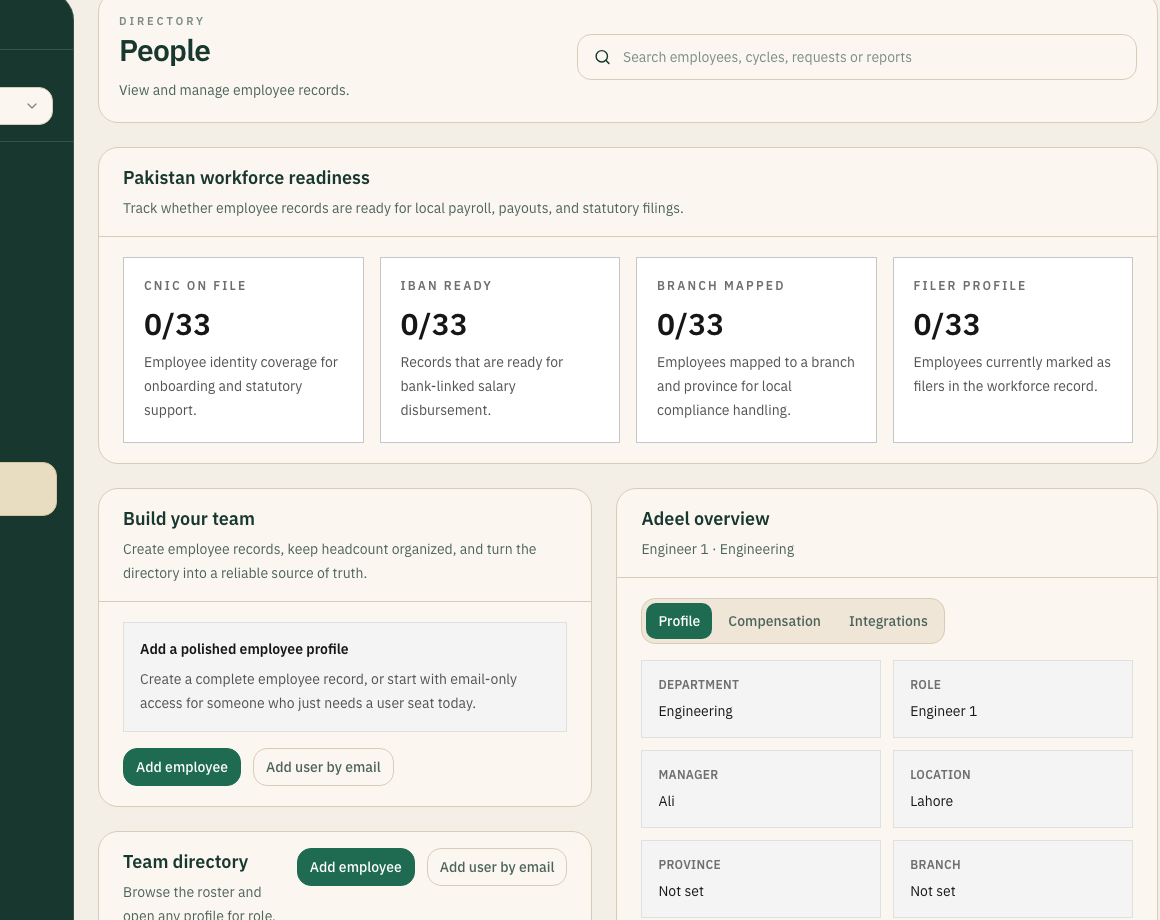
Employee records lose value when they are only a contact list. Operations need payroll fields, branch ownership, manager context, documents, attendance identifiers, and readiness state in one place.
Use case
The employee directory becomes more useful when it powers the work around it.
4
Operating steps
3
Expected outcomes
Use case
A workforce directory is more valuable when it can support onboarding, payroll readiness, and approvals in the same system.
Inside this view
Visible
Execution state
Owned
Exception flow
The operational problem
Employee records lose value when they are only a contact list. Operations need payroll fields, branch ownership, manager context, documents, attendance identifiers, and readiness state in one place.
How the operating model changes
NxtGenSoftware turns the employee record into the anchor for workforce execution. The record drives approvals, attendance mapping, payroll readiness, and lifecycle work.
Best suited for
Bring employee records, readiness fields, and workflows into one source of truth.
Centralize your recordsWorkflow
Define the employee profile fields that actually support operations.
Attach payroll, attendance, branch, manager, and document context.
Surface missing information as readiness work, not passive warnings.
Use records to power approvals and handoffs across HR, managers, and payroll.
Implementation notes
Detail
Store the fields the business actually needs to act on, not just a minimal HR profile.
Detail
Surface readiness gaps before they become downstream blockers.
Detail
A record should not be static. It should support approvals, device mapping, payroll prep, and lifecycle work.
Next step
If this page matches the problem your team is trying to solve, the next useful move is a structured conversation around rollout and operating fit.
Continue