Industry
Manufacturing
Support branch-heavy teams, attendance hardware, and readiness work across production operations.
Distributed attendance operationsOperational readiness before payroll
Operational problem
Manufacturing workforces combine shift patterns, attendance devices, branch or plant complexity, and payroll-sensitive exceptions. A generic employee directory rarely gives operations the control needed across facilities.
What changes in the platform
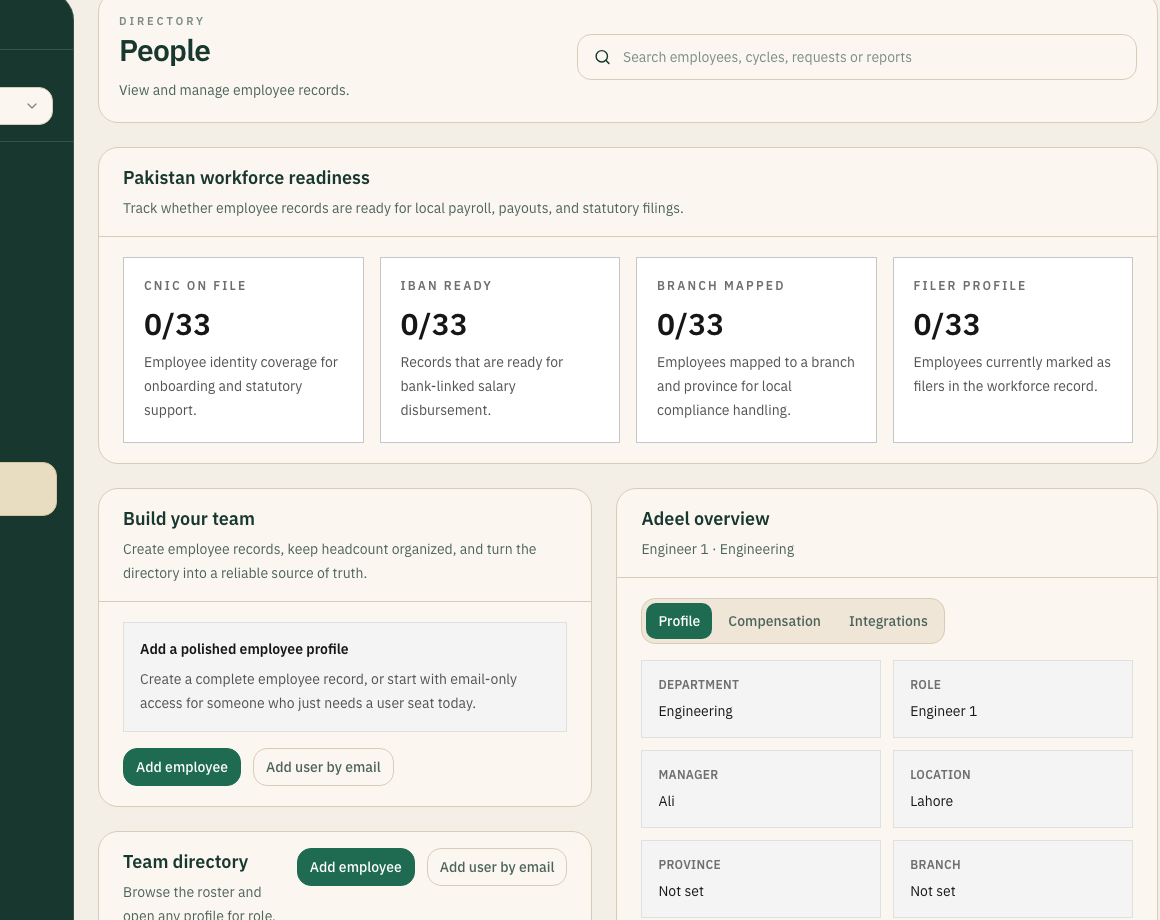
Map employees by facility, department, manager, and device code.
Industry
Retail
Bring branch visibility, workforce records, and daily approvals into one place.
Multi-branch visibilitySimpler approval flow
Operational problem
Retail teams operate across stores where employee movement, manager approvals, and attendance issues can change daily. Central HR often receives updates late and has limited visibility into branch-level execution.
What changes in the platform
Keep each employee tied to store, manager, role, and current employment state.
Industry
Services
Support growing services teams with cleaner records, approvals, and reporting discipline.
Scale the basics cleanlyGive leadership usable visibility
Operational problem
Services companies scale through people. When onboarding, approvals, expenses, and employee records are split across tools, managers lose visibility and HR becomes a bottleneck for routine execution.
What changes in the platform
Create a structured employee record before onboarding work begins.
Industry
Distributed Teams
Standardize records, approvals, and readiness work across geographically spread teams.
Clear status across locationsConsistent employee records
Operational problem
Distributed teams struggle when local operations move faster than central records. Managers approve work in one place, HR updates another, and payroll receives incomplete context later.
What changes in the platform
Define branch, location, manager, and workforce segment for each employee.