
The operational problem
Payroll cleanup is expensive because it happens late. Missing records, attendance exceptions, and approval gaps become urgent only when the payroll team is already closing the cycle.
Customer example
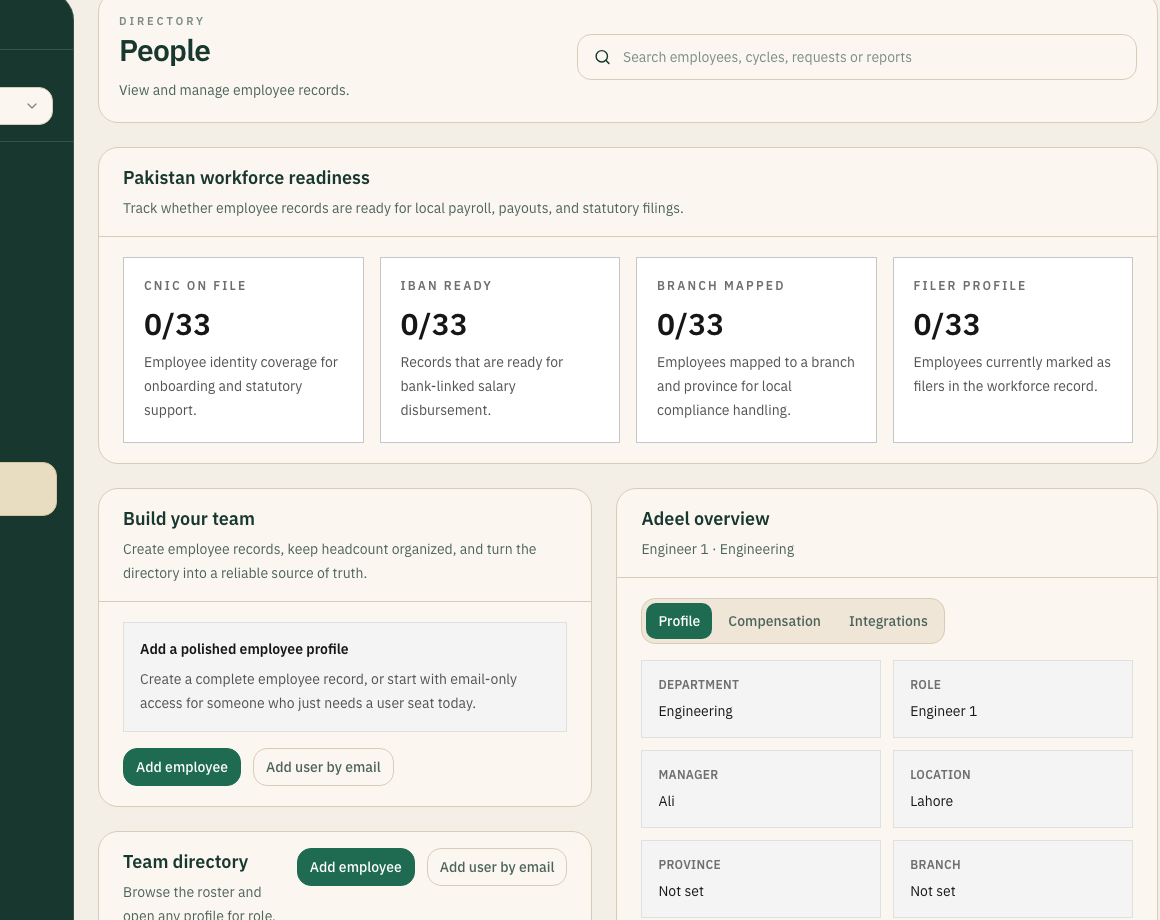
Better readiness visibility changes payroll prep from reactive cleanup to earlier correction.
4
Operating steps
3
Expected outcomes
Customer example
The directory view makes it much easier to act on missing or incomplete employee data before disbursement.
Inside this view
Visible
Execution state
Owned
Exception flow
The operational problem
Payroll cleanup is expensive because it happens late. Missing records, attendance exceptions, and approval gaps become urgent only when the payroll team is already closing the cycle.
How the operating model changes
NxtGenSoftware moves cleanup earlier. Readiness views, exception queues, and profile completeness indicators give HR and payroll a way to fix issues before the deadline.
Best suited for
How a workforce team reduced last-minute payroll corrections by improving record visibility.
Discuss payroll cleanupWorkflow
Define payroll-critical fields and approval dependencies.
Review readiness gaps before the payroll window opens.
Close attendance and approval exceptions with visible ownership.
Hand off cleaner inputs to payroll with fewer unresolved questions.
Implementation notes
Detail
Critical employee data gaps were discovered too late in the cycle.
Detail
The team used readiness views to close issues earlier and reduce fire drills.
Detail
Payroll prep became more predictable and easier to manage.
Next step
If this page matches the problem your team is trying to solve, the next useful move is a structured conversation around rollout and operating fit.
Continue