
The operational problem
Branch rollouts often fail because devices, records, employee identifiers, and local ownership are launched as separate workstreams.
Customer example
A branch-heavy team uses NxtGenSoftware to align records, attendance devices, and queue visibility.
4
Operating steps
3
Expected outcomes
Customer example
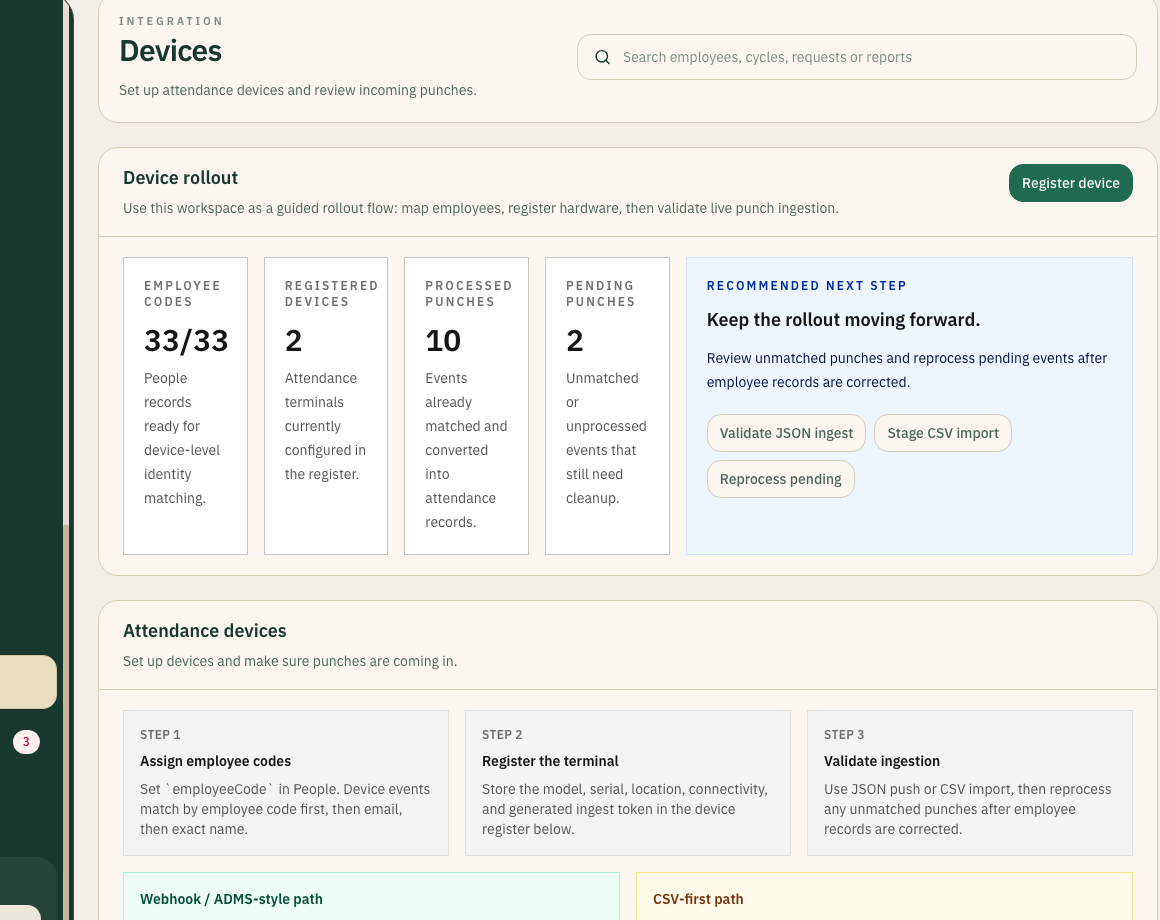
Device registration and workforce readiness stay visible as branches are brought online.
Inside this view
Visible
Execution state
Owned
Exception flow
The operational problem
Branch rollouts often fail because devices, records, employee identifiers, and local ownership are launched as separate workstreams.
How the operating model changes
NxtGenSoftware gives rollout teams a repeatable branch activation model. Each location can be staged around employee readiness, attendance setup, manager ownership, and exception review.
Best suited for
How a multi-branch workforce team standardizes records and attendance rollout.
See rollout planningWorkflow
Prepare employee records for the branch before device go-live.
Register terminals and validate employee-code mapping.
Run a controlled ingestion period and review exceptions daily.
Move the branch into steady-state operations once readiness and attendance quality are stable.
Implementation notes
Detail
Device admin, employee records, and payroll prep were fragmented across different workflows.
Detail
The team used one operating surface to register devices, track readiness, and resolve exceptions.
Detail
Branch rollout became more repeatable and less dependent on manual coordination.
Next step
If this page matches the problem your team is trying to solve, the next useful move is a structured conversation around rollout and operating fit.
Continue